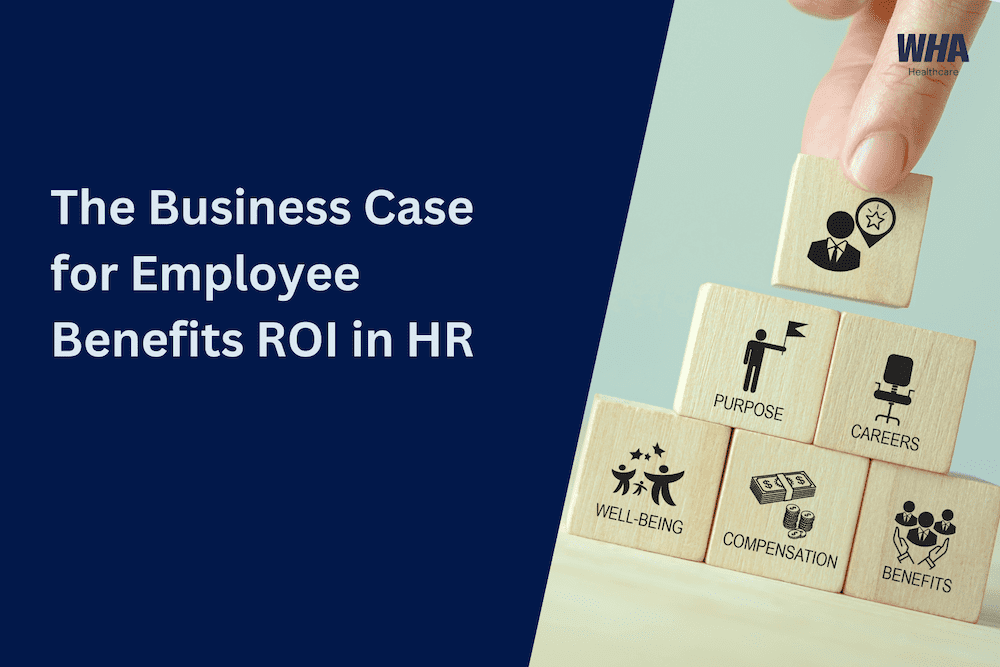
The Business Case for Employee Benefits ROI in HR
Employee benefits ROI has become a central consideration for HR managers who are under pressure to justify spend, improve retention and demonstrate measurable value to senior stakeholders. In an environment shaped by rising costs, workforce expectations and ongoing wellbeing challenges, benefits decisions are no longer based on good intentions alone. They are increasingly judged on outcomes.
For many HR teams, engagement with benefits suppliers stalls not because of lack of interest, but because the case for return on investment has not been made clearly enough. Cash plans, in particular, are sometimes misunderstood as a ‘nice to have’ rather than a strategic tool. Yet when viewed through the lens of employee benefits ROI, (Return on Investment) their value becomes far more tangible.
Why Employee Benefits ROI Matters More Than Ever
HR managers are being asked to do more with limited resources. Budget scrutiny is increasing, and benefits spend must compete with other priorities such as pay, recruitment and development. In this context, employee benefits ROI provides a common language that resonates with both HR and finance teams.
Return on investment in benefits is not solely about immediate cost savings. It also encompasses reduced absence, improved retention, higher engagement and greater workforce stability. When benefits are assessed holistically, their contribution to organisational performance becomes clearer.
For HR managers struggling to secure buy-in, reframing the conversation around employee benefits ROI can be a turning point.
The Hidden Cost of Inaction
One of the challenges with benefits decision making is that the cost of doing nothing is often less visible than the cost of action. Delayed healthcare, unmanaged stress and low engagement can quietly erode productivity over time.
From an employee perspective, postponing routine care or ignoring minor health concerns can lead to bigger issues later. From an employer perspective, this often shows up as short term absence, presenteeism or eventual turnover. These outcomes carry real costs, even if they are not immediately attributed to benefits gaps.
Understanding employee benefits ROI means recognising that preventative support can reduce these hidden costs before they escalate.
Why Cash Plans Are Often Overlooked
Cash plans are sometimes underestimated because they focus on everyday healthcare rather than catastrophic events. However, this everyday focus is precisely where much of the value lies.
When employees feel supported to manage routine health needs, they are less likely to delay care due to cost concerns. This early intervention supports both physical and mental wellbeing and can reduce the likelihood of longer absences.
For HR managers assessing employee benefits ROI, cash plans offer a clear and measurable link between modest investment and frequent employee use. High utilisation is not a drawback; it is evidence that the benefit is relevant.
Employee Benefits ROI and Retention
Retention remains a persistent challenge across sectors. While salary plays a role, employees increasingly weigh how supported they feel by their employer. Benefits that are visible, accessible and easy to use often have a disproportionate impact on loyalty.
Cash plans contribute to employee benefits ROI by offering support that employees notice and value. Because claims are frequent and straightforward, employees are reminded regularly that their employer has invested in their wellbeing.
For HR managers seeking to strengthen retention without committing to unpredictable costs, this visibility is a key advantage.
Read more on the Top 10 Cash Plan benefits.
Making the Numbers Work
A common concern among HR managers is whether benefits can demonstrate financial return in a way that stands up to scrutiny. While not every outcome can be reduced to a spreadsheet, several indicators contribute to employee benefits ROI:
- Reduced short term absence linked to earlier treatment
- Lower turnover, particularly in lower and middle income roles
- Improved engagement scores where benefits are clearly communicated
- Greater predictability of benefits spend compared to reactive costs
Cash plans are particularly well suited to this analysis because costs are fixed and transparent. This predictability allows HR teams to plan confidently and explain value clearly to leadership.
Supporting Wellbeing Without Complexity
Complex benefits can undermine employee benefits ROI if employees do not understand or use them. Cash plans are often valued because they are simple. Employees know what is covered, how to claim and what to expect.
This clarity reduces friction and increases engagement. For HR managers, fewer questions and smoother administration also contribute to return on investment by reducing internal time spent managing benefits queries.
Simplicity should not be mistaken for lack of impact. In many cases, it is the simplicity that drives adoption and value.
Aligning Benefits With Organisational Values
For organisations with a strong people first or mutual ethos, benefits decisions are about more than cost efficiency. They are a reflection of how the organisation treats its people.
Employee benefits ROI in this context includes cultural outcomes. Benefits that feel fair, inclusive and supportive reinforce trust and alignment. Cash plans, which offer the same core support regardless of role or salary, can strengthen perceptions of fairness.
This alignment is particularly important for organisations such as credit unions, building societies and not-for-profit employers.
Relevance Across Wales and the UK
Employers across Wales and the rest of the UK face similar challenges, but local context matters. Access to healthcare, cost pressures and workforce demographics all influence how benefits are perceived.
Cash plans support employee benefits ROI by offering consistent support regardless of location. For organisations with dispersed or hybrid workforces, this consistency reduces inequality of access and supports a more cohesive employee experience.
Building the Case Internally
For HR managers who are not yet gaining traction with decision makers, the key is to frame benefits conversations around outcomes rather than features.
Employee benefits ROI provides a structure for this discussion. By linking cash plans to reduced absence, improved engagement and predictable costs, HR teams can move the conversation from cost to value.
This approach also supports more constructive dialogue with finance colleagues, who are often focused on certainty and risk management.
Choosing the Right Partner
Employee benefits ROI is influenced not just by the benefit itself, but by the partner delivering it. Reliability, clarity and service quality all affect employee perception and engagement.
As a not-for-profit organisation, WHA Healthcare focuses on delivering simple, affordable support that prioritises people over profit. For HR managers, working with a partner that shares these values can strengthen both the practical and cultural return on investment.
Turning Consideration Into Action
Non-engagement does not necessarily mean lack of interest. Often it reflects uncertainty or competing priorities. By grounding discussions in employee benefits ROI, HR managers can create space for more productive decision making.
Cash plans offer a pragmatic way to demonstrate value without introducing complexity or financial volatility. They address everyday needs, support wellbeing and provide visible evidence of employer commitment.
What This Means for HR Managers
Employee benefits ROI is not about proving perfection; it is about making informed, balanced decisions that support both people and performance. In a challenging environment, benefits that deliver steady, measurable value deserve serious consideration.
For HR managers seeking to secure buy-in, cash plans represent a credible and practical component of a wider benefits strategy, one that supports employees before small issues become bigger problems, and helps organisations stay resilient over time.
FAQs
What does employee benefits ROI mean?
Employee benefits ROI (Return on Investment) refers to the measurable value employers gain from benefits, including improved retention, reduced absence, higher engagement and predictable costs.
Why should HR managers focus on employee benefits ROI?
HR managers should focus on employee benefits ROI to justify spend, demonstrate value to leadership and ensure benefits support both employees and business performance.
How do cash plans improve employee benefits ROI?
Cash plans improve employee benefits ROI by supporting everyday healthcare, encouraging early intervention and reducing the likelihood of stress related absence and disengagement.
Are cash plans cost-effective for employers?
Yes, cash plans are cost effective because costs are fixed and predictable, while employee usage is high, making value easier to evidence.
How can HR teams measure employee benefits ROI?
HR teams can measure employee benefits ROI through absence trends, retention rates, employee feedback, benefits uptake and overall cost predictability.
Are cash plans suitable for all workforce sizes?
Yes, cash plans, particularly by WHA Healthcare can scale well for organisations of all sizes and are particularly useful where HR teams need simple, easy to manage benefits.
Have a conversation about Employee Benefits ROI
Find out whether cash plans are the right fit for your organisation – without obligation.